Launch a Zenler Template First
 David Zenler

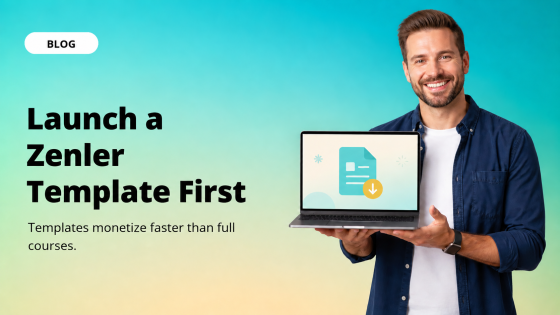
Launch a practical template before a full course to validate demand, create revenue faster, and learn what your audience wants next with Zenler.
Launch a template first when your audience needs a usable asset more than a long explanation. A template can prove demand, create revenue, and reveal what course should come next.
That is why the core message matters: Templates monetize faster than full courses. The title is not just a nice idea. It is a practical decision about how creators should build, sell, or improve their offer inside Zenler.
For creators who want a faster product than a full recorded course, the useful question is not whether this sounds smart. It is whether the action helps sell a practical template that solves one immediate job with less friction and more confidence.
Why This Matters Now
Creators are under pressure to make more content, run more tools, and publish more offers. That pressure can make every decision feel urgent, even when only one part of the system is actually blocking progress.
The mistake is building a large course when the buyer mainly needs a shortcut they can use today. It looks productive from the outside, but it often leaves the buyer or student with more confusion than clarity.
A stronger creator business is built from a clear promise, a direct path, useful follow-up, and a learning experience that people can actually complete. Everything else should support those four things.
This matters because small leaks compound. A weak next step loses leads. A vague offer loses buyers. A heavy lesson loses students. The fix is rarely one dramatic rebuild. Most of the time, the fix is making the next meaningful action easier to understand and easier to take.
That is also why Zenler works best when creators use it as a connected business system, not just as a place to upload content. The more connected the journey is, the easier it becomes to spot what is working, remove friction, and keep the reader or student moving.
How To Do It In Zenler
Start here: choose one repeatable task, turn your method into a template, add short instructions, and sell it through Zenler. Keep the first version simple enough that you can explain it in one or two sentences.
A launch email template, pricing calculator, or lesson planning sheet can become a useful paid product before a full programme exists. That is the kind of practical move that makes the idea useful rather than theoretical.
Inside Zenler, the advantage is that your page, course, email, community, checkout, and student access can stay connected. When the pieces are close together, you can see the journey and fix it faster.
Build the flow in plain order. First, create the page or lesson that answers the immediate need. Next, add the supporting asset, email, checkout, or community prompt that helps the person continue. Finally, review the whole path from the learner's point of view and remove anything that makes the next step feel unclear.
You do not need to make the system fancy on day one. A simple page with a clear promise can beat a beautiful page with no decision path. A short lesson with a practical task can beat a long lesson that leaves the student unsure what to do. The aim is momentum.
What Good Looks Like
A good version is clear before it is clever. The reader should understand who it is for, what problem it solves, what happens next, and why they can trust the process.
Use plain sections, specific examples, and direct calls to action. If a section does not help the person decide, learn, or move forward, it probably does not need to be there yet.
The best test is simple: would a busy person know what to do after reading this? If yes, you are closer. If no, simplify the page, lesson, email, or offer until the next step is obvious.
Good also looks specific. Instead of telling people they will get more confidence, show the exact moment that confidence appears. Instead of saying the course is practical, show the checklist, template, workflow, demonstration, or support point that makes it practical.
When the offer feels specific, the buyer has less mental work to do. They can see the gap between where they are now and what your product helps them do next. That clarity creates trust before you ask for the sale.
A Practical Checklist
Write the main promise in one sentence. Name the person it is for. Name the result they want. Remove any line that sounds impressive but does not help them decide.
Then check the journey. Does the content lead naturally to the opt-in or offer? Does the page answer the biggest buying question? Does the email follow-up bring people back with value instead of noise?
Finally, choose one improvement and publish it. Do not turn every insight into a full rebuild. Make the smallest useful change, measure what happens, and keep moving.
Before you call it finished, read the page or lesson out loud. Anywhere you hesitate, simplify. Anywhere you sound like you are trying to impress, make it more direct. Anywhere the reader might ask, 'So what do I do now?', add the next action.
Then check the practical pieces: headline, promise, proof, next step, delivery, follow-up, and measurement. If those are in place, you have a working asset. If one is missing, fix that first before adding more content.
What To Avoid
Avoid hiding behind complexity. More modules, more pages, more automations, and more tools do not automatically create a better experience.
Avoid vague claims. If the offer promises a transformation, show what changes, how the student gets there, and what support or proof makes the promise believable.
Avoid creating content that only sounds good to other creators. Your buyer or student needs an answer, a reason to trust you, and a clear next step.
How To Measure It
Look for behaviour, not just opinion. Are people clicking, opting in, replying, buying, starting lessons, finishing modules, or asking better questions?
If the signal is weak, diagnose the exact point. Traffic without opt-ins suggests the lead magnet or page needs work. Opt-ins without sales suggests the offer or follow-up needs work. Sales without completion suggests the course path needs work.
This is where simple systems win. When the workflow is clean, you can see what is happening and fix the right part without guessing.
Related Posts
• How to create your first online course with Zenler
• Launch your first online class
Ready To Put This Into Practice?
If you remember one thing, make it this: Templates monetize faster than full courses. Turn that into one clear action in your Zenler setup today.
Ready to package your expertise and sell with more confidence? Try Zenler risk free for 30 days and use the Accelerator Program to guide your next move.
FAQ
What does Launch a Zenler Template First mean?
Launch a template first when your audience needs a usable asset more than a long explanation. A template can prove demand, create revenue, and reveal what course should come next.
How do I start without overcomplicating it?
Start with one clear action: choose one repeatable task, turn your method into a template, add short instructions, and sell it through Zenler Keep the first version focused, then improve it with real feedback.
Why does this matter for course creators?
It helps creators who want a faster product than a full recorded course sell a practical template that solves one immediate job without adding unnecessary complexity.
How does Zenler help?
Zenler keeps key parts of the creator business connected, including pages, courses, checkout, email, community, and student access. That makes it easier to build a clear journey and improve it over time.
Have a useful template or shortcut your audience would pay for? Start selling your digital product with Zenler and manage your pages, checkout, marketing, and customer experience in one place.
Categories: : Creator Strategy
Copyright © 2026 Zenler. All rights reserved.
Terms | Privacy Policy | Cookie Policy | Support